
TAMEST Profile: Charles “Charley” Taylor, Ph.D. (NAE), The University of Texas at Austin
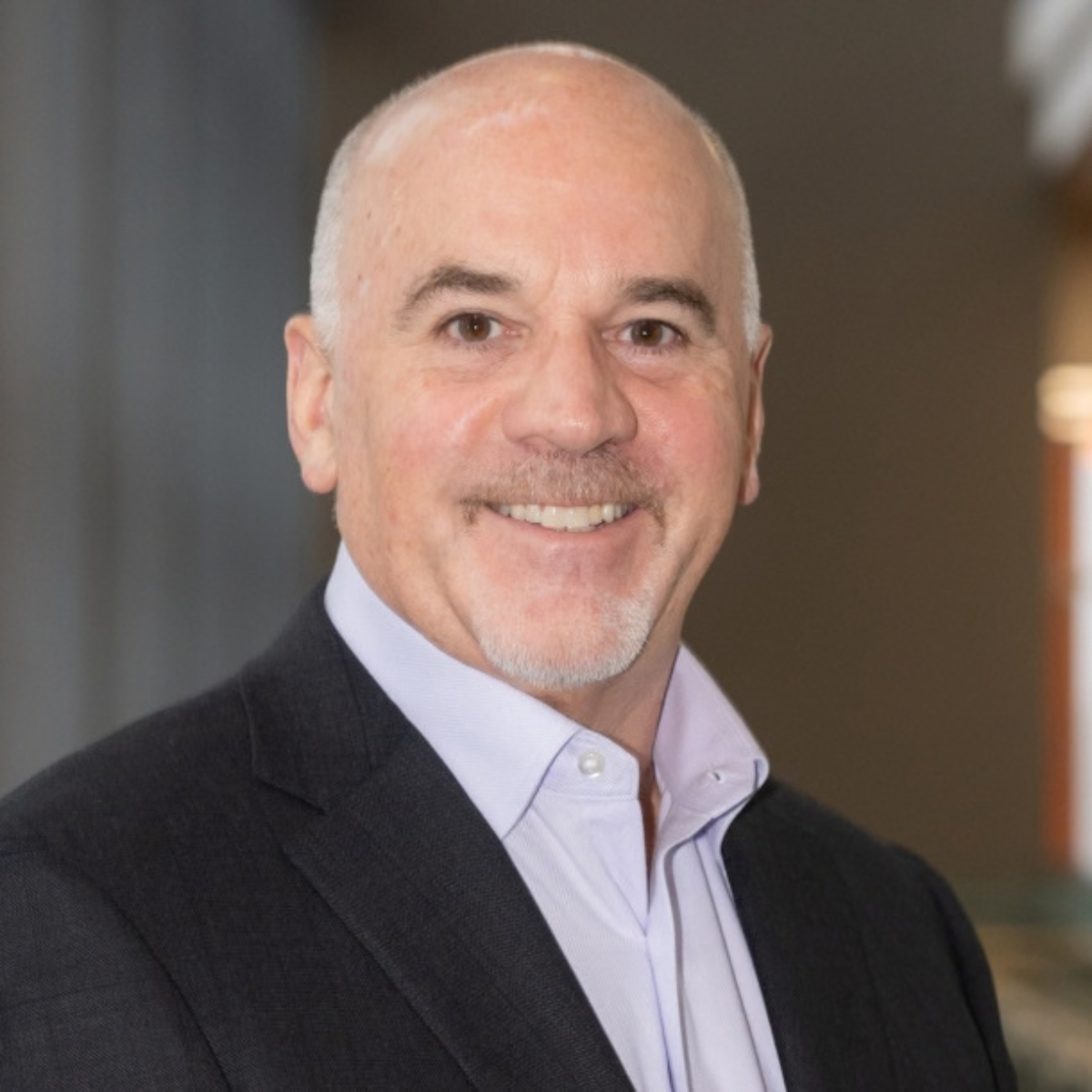
TAMEST Member and TAMEST 2027 Annual Conference Medicine Co-Chair Charles “Charley” Taylor, Ph.D. (NAE) of The University of Texas at Austin (UT Austin) has dedicated more than three decades to engineering computational tools that turn mathematical theory into clinical breakthroughs. His career spans from modeling the performance of aircraft engines at GE to revolutionizing non-invasive cardiac care worldwide.
As the W.A. “Tex” Moncrief, Jr., Chair in Computational Medicine at the Oden Institute for Computational Engineering & Sciences, Professor of Internal Medicine at Dell Medical School and Director of the Center for Computational Medicine at UT Austin, Dr. Taylor is a global authority on patient-specific simulation. As Co-Founder of HeartFlow, Inc., he transformed cardiovascular diagnostics by demonstrating that arterial fluid mechanics and medical imaging could reliably guide clinical decisions, pioneering technology that has now reached nearly a million patients across more than 1,800 hospitals.
Elected to the National Academy of Engineering in 2024, Dr. Taylor relocated to Texas in 2025 to lead UT Austin’s new computational medicine initiatives and establish a Medical Digital Twin venture studio backed by UT and Lyda Hill Philanthropies. He also currently serves as the Medicine Co-Chair for the TAMEST 2027 Annual Conference: Frontiers of Discovery, taking place February 1–3, 2027, in Houston, Texas.
TAMEST connected with Dr. Taylor to discuss how computational medicine is reshaping health care, his interdisciplinary vision for the Center for Computational Medicine and what attendees can expect from the TAMEST 2027 Annual Conference in Houston.
Tell us a little about yourself and your work.
I completed my undergraduate degree in mechanical engineering in 1987 at Rensselaer Polytechnic Institute in Troy, New York, and went to work for GE at its Global Research & Development Center. I was developing computer simulation software for a variety of problems, ranging from simulating the performance of aircraft engines to manufacturing products using advanced materials. I was always interested in the use of mathematical and computer models to simulate complex physical systems.
From there, I attended Rensselaer where I completed my master’s degrees in mechanical engineering and mathematics, and then went to Stanford University in 1992 to pursue my Ph.D. in engineering, specializing in computational mechanics. I was co-advised by TAMEST Member Thomas J.R. Hughes, Ph.D. (NAE, NAS), the leading scholar in the field of Computational Mechanics and a Professor of Mechanical Engineering at Stanford at that time, who is now a professor at UT, and Christopher K. Zarins, M.D., the Chief of Vascular Surgery at Stanford and a world-renowned scientist.
I completed my Ph.D. in mechanical engineering at Stanford on the topic of computer modeling of blood flow in arteries in 1996 and joined the faculty in 1997. I built a research program focused on combining medical imaging data and computer methods to model blood flow in the cardiovascular system and received tenure at Stanford as an Associate Professor of Bioengineering and Surgery in 2004.
In 2010, I founded a software company, HeartFlow, Inc., with Dr. Zarins, and left Stanford in 2011 to focus full-time on this endeavor. HeartFlow pioneered the use of computer simulation methods to improve the diagnosis of heart disease and has now been used in nearly a million patients at more than 1,800 hospitals worldwide. In 2023, HeartFlow was recognized as one of the most widely adopted AI products in U.S. health care and is now publicly traded on the Nasdaq.
I was elected to the National Academy of Engineering in 2024, and in January 2025 joined UT Austin to launch a new Center for Computational Medicine, a joint initiative between the Oden Institute for Computational Engineering & Sciences and Dell Medical School. My research program at UT is focused on creating comprehensive digital twins to improve the care of patients with heart and respiratory diseases. My goals for the Center are focused on medical digital twin science and translation into clinical practice and I am launching a Medical Digital Twin venture studio (with support from Lyda Hill Philanthropies and UT Austin) to foster the translation of technology into clinical practice.
Your career has pioneered the intersection of computational modeling, fluid mechanics and cardiovascular medicine, including the founding of HeartFlow. How has computational medicine transformed how clinicians diagnose and treat disease today?
It is so exciting to see what has become possible in the last 10 years in medicine, especially due to advances in AI, computational science and improvements in computing power. There are now over 1,500 FDA-cleared AI technologies and dozens of companies bringing products into patient care.
When I started HeartFlow, I admit there was a great deal of skepticism about the idea of deriving clinical value from computer simulations (digital twins) of the heart. However, these methods have been evaluated in hundreds of clinical studies, are now included in nearly all cardiology society clinical practice guidelines, and are reimbursed by Medicare, Medicaid and nearly all private insurance companies.
It is also exciting to see these technologies being used in a wide range of other clinical fields.
What major challenges or opportunities do you see on the horizon as data-driven models, digital twins and AI continue to integrate into clinical decision-making?
The greatest challenge has been, and will remain, the identification of appropriate clinical questions and proving clinical value with robust evidence. I personally believe that just as we see thousands of startups focused on pharmaceuticals, biologics and medical devices, we will ultimately see a new ecosystem in computational medicine as we leverage the power of AI and digital twins to improve medical care. It is extraordinarily exciting to contemplate the changes we will see in the next 10 years!
You’ve bridged academic research and industry entrepreneurship throughout your career. How are you mentoring the next generation of engineers and clinical innovators at UT and beyond?
This opportunity to mentor the next generation of engineers, scientists and clinical innovators is what excited me the most about restarting my academic career at UT.
I see mentorship opportunities in the research lab, in the classroom and through the venture studio. I am especially keen to build bridges between medicine, science, engineering, and business students at UT since teams will solve the big problems related to the transformation of medicine by AI and digital twins.
As the Medicine Co-Chair of the TAMEST 2027 Annual Conference: Frontiers of Discovery, what related medicine and health care themes are you hoping to emphasize?
I have thoroughly enjoyed every TAMEST meeting I have attended since moving to Texas. I am grateful for the opportunity to chair the TAMEST 2027 Annual Conference Medicine Session.
At the Medicine Session, the speakers will be talking about the use of AI and digital twins for cardiovascular disease, cancer and orthopedics. I am really excited about the fantastic speakers that will join us.
How are you working to make the 2027 conference interdisciplinary, and what kinds of cross-sector dialogue are you hoping to foster?
Our speakers will include world-renowned physicians, scientists and biomedical engineers. I selected individuals who are also highly collaborative across medicine, science, engineering and technology.
Why do you live and work in Texas?
I spent the first 28 years of my life on the East Coast and the next 33 years in California, but I am so happy to be living and working in Texas now. It is a really special place.
I often ask myself, “What took me so long to get here?” I am especially excited to be here because, in my experience so far, people who live here embody that frontier mentality of wanting to build something new.
I also have felt that everyone I have met is so friendly and welcoming. I have seen this at UT, at TAMEST, in the city of Austin and at the school my 15-year-old twins attend. I consider myself so fortunate to work with amazing leaders at UT Austin, like TAMEST Member Karen Willcox, Ph.D. (NAE), Director of the Oden Institute, Claudia Lucchinetti, M.D., Dean of the Dell Medical School, and Paul S. Mueller, M.D., Chair of Internal Medicine. Within the first year of being here, I was welcomed into TAMEST, received the Governor’s University Research Initiative (GURI) award from Governor Greg Abbott, had the opportunity to meet Michael Dell and so many other amazing Texans, and presented at UT President Davis’ Commercial Advisory Board meeting.
What does being a member of TAMEST and the National Academy of Engineering mean to you?
It was an incredible honor to be inducted into the National Academy of Engineering and asked to join TAMEST. I have just focused my career on doing the best science I can and on how I can have a positive impact on health care.
I feel incredibly fortunate to have had the opportunity to see the products I have created impact patients’ lives, physicians’ practices and health care systems. I am grateful to be in Texas, where I hope I can contribute to new opportunities to bring AI and digital twin science and engineering into medicine.
Is there anything else you’d like to add?
See you in Houston in February.