
TAMEST 2027 Annual Conference speakers and sessions will explore innovations in the fields of precision medicine, neural engineering, targeted disease therapeutics, deep space exploration, robotics and more. Learn more about the 2027 annual conference speakers below.
2027 Annual Conference Speakers
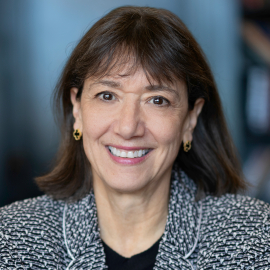
Monica M. Bertagnolli, M.D. (NAM)
President
National Academy of Medicine
Throughout her career, Dr. Bertagnolli has been at the forefront of the field of translational oncology. Her clinical practice of surgery focused on caring for people with hereditary cancer predisposition syndromes, particularly those involving gastrointestinal cancers and soft tissue sarcomas. Her research laboratory examined the relationship between tissue inflammation and tumorigenesis, leading her to pursue clinical trials demonstrating the effects of anti-inflammatory drugs for cancer prevention and treatment. From 2011–2022, Dr. Bertagnolli served as the Group Chair of the Alliance for Clinical Trials in Oncology, a nationwide network addressing the needs of people with cancer by conducting clinical and translational research across many cancer types.
Throughout her career, she has championed collaborative initiatives to enable a learning healthcare system by transforming the data infrastructure for clinical research. These efforts have included spearheading the mCODE initiative, which enabled standardized oncology data exchange, DataCOUNTS, an NIH program managing data to drive a learning health system, as well as the launch of GHDE, a nonprofit foundation engaging health systems in collaborative research using data obtained from clinical care settings.
Dr. Bertagnolli is a Past President of the American Society of Clinical Oncology and has been a member of the Board of Directors of the National Cancer Society, Prevent Cancer Foundation, Natera and Friends of Cancer Research. She also is a member of the Accademia Nazionale de Lincei and the American Adacemy of Achievement, and in 2023, was awarded the title of Cavaliere, Ordine al Merito Della Repubblica Italiana.
Dr. Bertagnolli was elected as a member of the NAM in 2021 and is the first woman to serve as its president. She graduated from Princeton University with a Bachelor of Science in Engineering degree and attended medical school at the University of Utah. She trained in surgery at Brigham and Women’s Hospital and was a research fellow in tumor immunology at the Dana-Farber Cancer Institute.
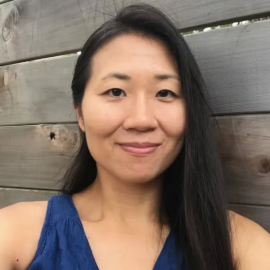
Kimberly Boddy, Ph.D.
Associate Professor of Physics
Director, Texas Center for Cosmology and Astroparticle Physics (TCCAP), Weinberg Institute for Theoretical Physics
The University of Texas at Austin
Dr. Boddy is a 2026 Sloan Research Fellow and received a Breakthrough Prize in Fundamental Physics in 2016 for her contributions to the Daya Bay Collaboration. Prior to joining UT Austin, she was a Provost’s Postdoctoral Fellow at Johns Hopkins University and a postdoctoral fellow at the University of Hawaiʻi at Mānoa. She received her Ph.D. from the California Institute of Technology and S.B. from the Massachusetts Institute of Technology.

Caroline Chung, M.D.
Founding Co-Director, Institute for Data Science in Oncology
Professor of Radiation Oncology and Diagnostic Imaging
The University of Texas MD Anderson Cancer Center
Caroline Chung, M.D., is the Founding Co-Director of the Institute for Data Science in Oncology and tenured Professor of Radiation Oncology and Diagnostic Imaging at The University of Texas MD Anderson Cancer Center and also served as the inaugural Vice President and Chief Data & Analytics Officer at UT MD Anderson Cancer Center. She is a clinician-researcher with a computational imaging lab focused on quantitative imaging and modeling to optimize personalized, adaptive treatment for cancer patients. Across her career, she has worked with industry on co-development of technology through to FDA approval and clinical implementation, establishing multiple academic-industry partnerships and serving as an advisor to start ups through the TMC Innovation accelerator. Internationally, Dr. Chung is a recognized thought leader across data governance, data science, AI and digital twins. This includes her leadership of the biomedical team for the National Academies of Sciences, Engineering, and Medicine (NASEM)-appointed committee addressing Foundational Research Gaps and Future Directions for Digital Twins, serving as Co-Chair of the American Society of Clinical Oncology (ASCO) AI Community of Practice, Co-Chair of the Quantitative Imaging for Assessment of Response in Oncology Report Committee of the International Commission on Radiation Units and Measurements, and member of the American Association for Cancer Research (AACR) Data Science Taskforce. She has also shared insights as an invited speaker at forums including the Milken Institute, Aspen Institute and World Health Expo as well as contributing as a member of the Forbes Tech Council. Most recently she has been named among the Top 50 Women leaders in Houston in 2026, named by Reuters as one of the 2026 Trailblazing Women in Enterprise AI, included among CDO Magazine Top 30 Healthcare Innovators 2026, and recognized with AI150’s AI for Health Impact Award.
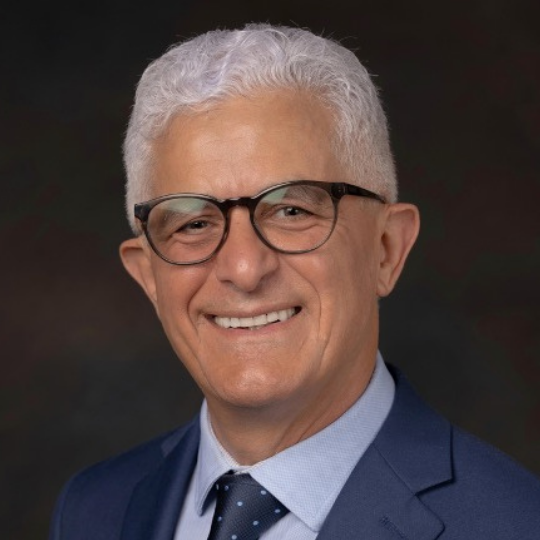
Menachem Elimelech, Ph.D. (NAE)
Nancy and Clint Carlson Professor, Department of Civil and Environmental Engineering
Nancy and Clint Carlson Professor, Department of Chemical and Biomolecular Engineering
Rice University
Menachem Elimelech, Ph.D., is the Nancy and Clint Carlson Professor at Rice University, with joint appointments in the Department of Civil & Environmental Engineering and the Department of Chemical & Biomolecular Engineering. Professor Elimelech’s research focuses on membrane-based processes for energy-efficient desalination and wastewater reuse, brine management and valorization technologies, and advanced materials for next-generation separation and water decontamination technologies. Professor Elimelech has received numerous awards in recognition of his research contributions. Notable among these awards are the 2005 Clarke Prize for excellence in water research; election to the US National Academy of Engineering in 2006; Eni Prize for ‘Protection of the Environment’ in 2015; and election to the Chinese Academy of Engineering in 2017, the Australian Academy of Technology and Engineering in 2021, and the Canadian Academy of Engineering in 2022. Professor Elimelech has advised 58 PhD students and 60 postdoctoral researchers, many of whom hold leading positions in academia and industry.
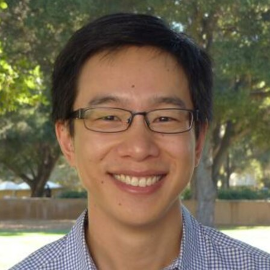
Jonathan Fan, Ph.D.
Associate Professor
Department of Electrical Engineering
Stanford University
Jonathan Fan, Ph.D., is an Associate Professor in the Department of Electrical Engineering at Stanford University, where he is researching topics at the intersection of machine learning, photonics, and sustainability. He received his bachelor’s degree with highest honors from Princeton University and his doctorate from Harvard University. He is the recipient of the Beckman Postdoctoral Fellowship, Air Force Young Investigator Award, Sloan Foundation Fellowship in Physics, Packard Foundation Fellowship, and the Presidential Early Career Award for Scientists and Engineers.
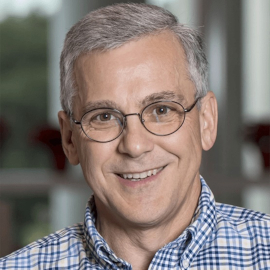
B.J. Fregly, Ph.D.
Trustee Professor and CPRIT Scholar in Cancer Research
Departments of Mechanical Engineering and Bioengineering
Rice University
B.J. Fregly, Ph.D., received his Bachelor’s degree from Princeton University (1986) and his Masters and Ph.D. degrees from Stanford University (1987 and 1993) in Mechanical Engineering. Following a year of post-doctoral research at the University of Lyon in France (1993–1994), Dr. Fregly worked as a software developer in Silicon Valley for Rasna/Parametric Technology Corporation (1995–1999). From 1999 to 2017, he served on the faculty of the Department of Mechanical & Aerospace Engineering at the University of Florida, where he was a Knox T. Millsaps Professor, a University of Florida Research Foundation Professor, and the recipient of department and college Teacher of the Year awards. In August of 2017, Dr. Fregly joined the Department of Mechanical Engineering at Rice University as a Professor and CPRIT Scholar in Cancer Research. His research focuses on modeling, simulation, and optimization of the human neuromusculoskeletal system with the goal of designing highly effective personalized treatments for movement impairments. To date, the three primary clinical application areas have been stroke, osteoarthritis, and pelvic cancer. Dr. Fregly has been the PI on over $13 million in research funding primarily from the National Science Foundation (including a CAREER Award), the National Institutes of Health, and the Cancer Prevention and Research Institute of Texas. He is a fellow of the American Society of Mechanical Engineers, the American Society of Biomechanics, and the American Institute for Medical and Biological Engineering. Most recently, Dr. Fregly received the Borelli Award from the American Society of Biomechanics, which is the society’s highest honor recognizing outstanding career accomplishments. The award was given primarily for Dr. Fregly’s development of the Neuromusculoskeletal Modeling Pipeline (https://nmsm.rice.edu), which is Matlab-based software that adds model personalization and treatment optimization functionality to Stanford’s OpenSim musculoskeletal modeling software. At Rice, Dr. Fregly has also served as a magister overseeing Brown College, a residential housing community of approximately 400 undergraduate students.
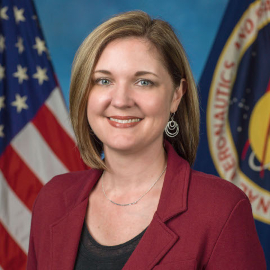
Kimberly A. Hambuchen, Ph.D.
Deputy Chief, Software, Robotics and Simulation Division
Robotics Engineer
NASA Johnson Space Center
Kimberly A. Hambuchen, Ph.D., currently serves as the Deputy Chief for the Software, Robotics and Simulation Division in the Engineering Directorate at NASA Johnson Space Center where she oversees technology development and system management for robotics, flight software, simulation, and crew countermeasures at NASA. Dr. Hambuchen has spent time in the International Space Station Program, led the Robotic Systems Technology Branch at NASA’s Johnson Space Center, and served as the Principal Technologist for Robotics in NASA’s Space Technology Mission Directorate’s (STMD). During her 20-year career as a robotics engineer at Johnson Space Center, Dr. Hambuchen developed human-robot interaction techniques and tools for the Robonaut and Centaur robots, the Space Exploration Vehicle (SEV), and bipedal humanoid, Valkyrie and developed the Affordance Template suite to assist in supervisory control of space robotics.
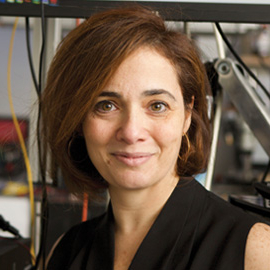
Michal Lipson, Ph.D. (NAE, NAS)
Eugene Higgins Professor of Electrical Engineering and Professor of Applied Physics
Department of Electrical Engineering
Columbia University
Michal Lipson, Ph.D., pioneered critical building blocks in the field of Silicon Photonics, which today is recognized as one of the most promising directions for solving the major bottlenecks in microelectronics. She is the inventor of over 45 issued patents and has co-authored more than 300 scientific publications, and is the Co-Founder of the silicon photonics for AI startup Xscape Photonics. In recognition of her work in silicon photonics, she was elected as a member of the National Academy of Sciences, National Academy of Engineering and the American Academy of Arts and Sciences. Her numerous awards include the NAS Comstock Prize in Physics, the MacArthur Fellowship, the Blavatnik Award, Optica’s R. W. Wood Prize, the John Tyndall Award, the IEEE Photonics Award, and an honorary degree from Trinity College, University of Dublin. She was elected the President of Optica in 2023, formerly known as The Optical Society. Since 2014, every year she has been named by Thomson Reuters as a top 1% highly cited researcher in the field of Physics.
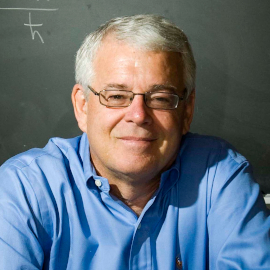
Allan H. MacDonald, Ph.D. (NAS)
Professor and Sid W. Richardson Foundation Regents Chair in Physics
Department of Physics
The University of Texas at Austin
As an undergraduate student at St. Francis Xavier University in Nova Scotia, Canada (that’s where he’s from), Allan H. MacDonald, Ph.D., started out thinking that he was interested in mathematics. As he learned a bit about math and science, he eventually realized that what attracted him most was applications of mathematics. He remembers being turned on when he started to understand that people really could build mathematical models of the world around them that correctly predicted completely unexpected and unknown behaviors. And he knew that building the models was fun. He had a few ideas for graduate studies including economics which he loved as an undergraduate. He chose physics because his girlfriend at the time, now his spouse, worked at a hospital attached to the University of Toronto’s downtown campus that was across the street from the physics department. It turned out to be a doubly good choice for him.
Prior to joining the faculty of UT Austin in 2000 (that also turned out to be a good choice for him), he spent a number of very enjoyable years working at the National Research Council of Canada’s Research Labs and at Indiana University. He has now been working on the theory of condensed matter for more than 40 years. He still wakes up in the morning anticipating the pleasure and privilege of spending his day thinking about new possibilities for unexpected and unknown behavior in condensed matter, and working with interesting young people finding their own directions in science.
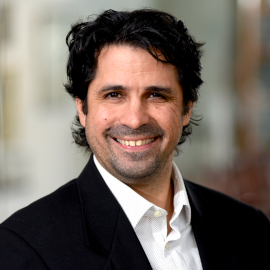
Anthony W. Maresso, Ph.D.
Melnick Chair in Virology
Baylor College of Medicine
Anthony William Maresso, Ph.D., is the Melnick Chair in Virology at Baylor College of Medicine. In 17 years, he has been awarded more than 106 million in grant funding allowing for the training of over 70 trainees across all levels of science while publishing over 100 original works of science. His contributions to science include founding TAILOR LABS (personalized GMP-made phage for treatment of antibiotic-resistant bacterial infections), founding PHIOGEN (a phage biotech whose objective is to solve major rate-limiting barriers in anti-infective development), co-inventor of ModiPHi (a phage evolution technology to overcome resistance), and co-inventor of PHI-HD (a phage capture technology). His lab spans many disciplines in the study of microbial life from vaccine development to evolution to the origins of life. He founded TexWEB, the world’s first comprehensive human virus monitoring program from wastewater. TexWEB was voted the 2024 medical breakthrough of the year by STAT News. In 2026, his team was awarded the inaugural Burroughs Welcome Award in Climate-Health, the only recipient of 161 competing teams. He does lot of other things too, like teaching, peer review, government committees and administrative stuff. He is married with three children and likes all things outdoors (fishing, kayaking, camping, etc.).

Vagheesh M. Narasimhan, Ph.D.
Associate Professor of Integrative Biology and Statistics & Data Science
Core Faculty and J. T. Oden Faculty Fellow
Center for Computational Medicine
Oden Institute for Computational Engineering and Sciences
The University of Texas at Austin
Vagheesh M. Narasimhan, Ph.D. is an Associate Professor of Integrative Biology and Statistics & Data Science at The University of Texas at Austin, and a Core Faculty and J. T. Oden Faculty Fellow in the Center for Computational Medicine at the Oden Institute for Computational Engineering and Sciences. After initially training in Electrical Engineering, with a focus on computer vision and information theory, Dr. Narasimhan did a Masters in Biostatistics at Harvard University under Curtis Huttenhower. He moved to the University of Cambridge and the Wellcome Trust Sanger Institute to do a Ph.D. in Genetics, advised by Chris Tyler-Smith and Richard Durbin. He was then a postdoctoral fellow at the Department of Genetics, Harvard Medical School with David Reich and Nick Patterson. The research in his lab has been funded by the National Science Foundation, the National Institutes of Health, the Paul Allen Family Foundation, the MD Anderson Cancer Accelerator, Texas Biologics, the Origen Health Research Center at Tec de Monterey, Lyda Hill Philanthropies, Love Tito’s Foundation, and BioMarin Pharmaceuticals. In 2025, he received the UT Austin Provost’s Research Excellence Award for the best research paper published in a calendar year at the university.
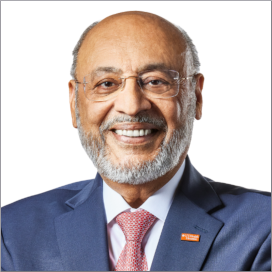
Jagat Narula, M.D., Ph.D.
K. Lance Gould Distinguished Chair of Coronary Pathophysiology, The University of Texas Health Science Center at Houston
President, World Heart Federation
Jagat Narula, M.D., Ph.D., completed medical school at SMS Medical College in Jaipur, India, followed by a cardiology fellowship and a Ph.D. in Cardiovascular Immunology at the All India Institute of Medical Sciences (AIIMS) in New Delhi. In 1989, he relocated to Massachusetts General Hospital and Harvard Medical School, where he completed a fellowship in cardiology, and advanced fellowships in heart failure and transplantation, and cardiovascular imaging, subsequently serving on the Massachusetts General Hospital cardiology faculty.
Dr. Narula, in 1997, moved to Philadelphia, Pennsylvania, where he served as the Chief of Cardiology, Vice Chairman for Research in the Department of Medicine, Director of the Center for Heart Transplantation, and Director of Cardiovascular Research at Hahnemann University School of Medicine. In 2003, he was recruited to serve as Chief of Cardiology, Director of the Heart Center at Douglas Hospital, Associate Dean for Research at the University of California–Irvine School of Medicine, and Medical Director of the Edwards Lifesciences Center for Advanced Cardiovascular Research and Technology at the University of California–Irvine Samueli School of Engineering.
From 2011 to 2022, Dr. Narula held the Philip J. and Harriet L. Goodhart Professorship of Medicine at the Zena and Michael A. Wiener Cardiovascular Institute of the Icahn School of Medicine at Mount Sinai. He also held professorial appointments in Diagnostic, Molecular and Interventional Radiology, Artificial Intelligence and Human Health, Population Health Science and Policy, and Health System Design and Global Health. During this period, he served as Chief of the Division of Cardiology at Mount Sinai Morningside, Director of Cardiovascular Imaging for the Mount Sinai Health System, and Associate Dean for Global Health.
In January 2023, Dr. Narula was recruited to The University of Texas Health Science Center at Houston (UTHealth Houston) as the K. Lance Gould Distinguished University Chair in Coronary Pathophysiology, Distinguished University Chair of Cardiovascular Health, Executive Vice President, and Chief Academic Officer.
Dr. Narula currently serves as President of the World Heart Federation (WHF) (2025–2026), having previously served as President-Elect (2023–2024) and Vice President (2021–2022). He also served a three-year term as Trustee of the American College of Cardiology (ACC). He served as an advisor to the National Academy of Medicine (2009–2011), providing recommendations for the Promotion of Cardiovascular Health in Low– and Middle–Income Countries, in the group chaired by Dr. Fuster; the recommendations were presented at the First United Nations High-Level meeting (2011) that addressed the non-communicable diseases. He presented to the UN General Assembly on behalf of WHF during the Fourth High-Level Meeting in September 2025.
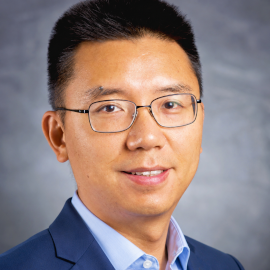
Yubin Zhou, Ph.D., M.D.
Professor
Presidential Impact and Chancellor EDGES Fellow
Director, Center for Translational Cancer Research (CTCR)
Institute of Biosciences and Technology
Texas A&M University
Yubin Zhou, M.D., Ph.D., is Professor, Chancellor EDGES Fellow, Presidential Impact Fellow, and Director of the Center for Translational Cancer Research at the Texas A&M University Institute of Biosciences and Technology. He also holds faculty appointments in Translational Medical Sciences, Medical Physiology, and the School of Engineering Medicine at Texas A&M. His research focuses on developing technologies to understand, engineer, and control biological systems, with particular interests in programmable biology, synthetic immunology, AI-enabled protein engineering, and translational cancer research. His laboratory has developed optogenetic, chemogenetic, and protein-engineering technologies for precise control of cellular signaling and immune function, with applications ranging from mechanistic discovery to next-generation cell and gene therapies. Zhou has published more than 200 peer-reviewed articles and has been recognized among Stanford University’s World’s Most-Cited Scientists. His research has generated more than a dozen patent applications, multiple technology licensing agreements, and contributions to clinical-stage therapeutic programs. His honors include the Leukemia & Lymphoma Society Translational Research Program Award, the National Cancer Institute Innovative Research in Cancer Nanotechnology Award, and Texas A&M research excellence awards. He is an elected fellow or member of the American Association for the Advancement of Science (AAAS), the American Institute for Medical and Biological Engineering (AIMBE) the Royal Society of Chemistry (RSC), and the National Academy of Inventors (NAI).
Sponsors