
TAMEST Profile: Martin G. Pomper, M.D., Ph.D. (NAM), UT Southwestern Medical Center
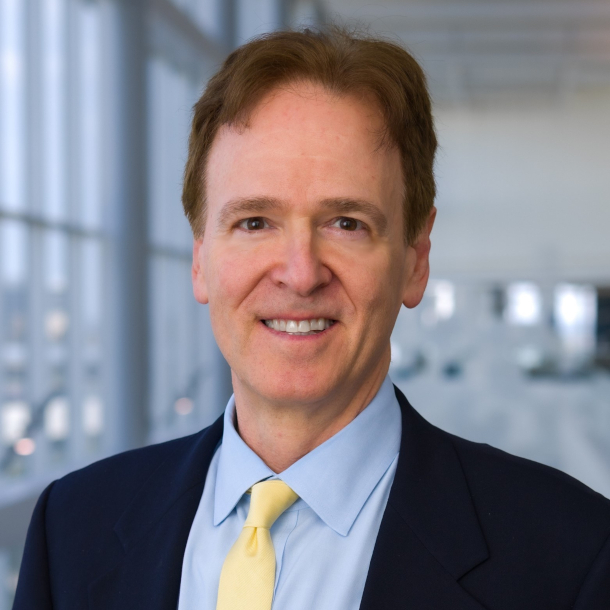
For more than three decades, TAMEST Member Martin G. Pomper, M.D., Ph.D. (NAM), has been at the forefront of turning laboratory discoveries into tools that change how physicians see and treat disease. As Professor and Chair of Radiology at UT Southwestern Medical Center, where he holds the Effie and Wofford Cain Distinguished Chair in Diagnostic Imaging, Dr. Pomper has built a career bridging chemistry, medicine and translational science, developing molecular imaging agents that reveal cancer and other conditions at the cellular level rather than relying on anatomy alone.
His research led to the discovery and development of PYLARIFY (piflufolastat F 18), the first commercial FDA-approved PSMA-targeted PET imaging agent for prostate cancer, now used in hundreds of thousands of patients worldwide. This year, that work earned Dr. Pomper a 2026 American Innovator Award from the Bayh-Dole Coalition, recognizing the journey from federally funded, bench-level research to an imaging agent now reshaping prostate cancer diagnosis and management.
Before joining UT Southwestern in 2023, Dr. Pomper was on the faculty at Johns Hopkins University, where he directed the Division of Nuclear Medicine and Molecular Imaging. Today, as Chair of Radiology, he continues to push the field forward — exploring how artificial intelligence and next-generation imaging technologies can sharpen diagnosis and personalize treatment — while also mentoring the next generation of physician-scientists.
Dr. Pomper serves as Science Co-Chair of the TAMEST 2027 Annual Conference: Frontiers of Discovery, taking place February 1–3, 2027, in Houston. TAMEST connected with Dr. Pomper to talk about his career, his award-winning research and what he’s most looking forward to at next year’s conference.
Tell us a little about yourself and your work.
I’m originally from Chicago. I did my undergraduate, medical and graduate training at the University of Illinois at Urbana-Champaign, earning a Ph.D. in chemistry as part of an M.D.-Ph.D. program. I then completed my medical internship on the Osler Medical Service at Johns Hopkins, followed by a radiology residency and subspecialty training in neuroradiology and nuclear medicine. I was on the faculty there from 1995 until 2023.
Throughout that time, I applied chemistry to problems in medicine — particularly cancer and central nervous system disease, where there’s some overlap — generating new molecular imaging agents, mainly in nuclear medicine, so we could detect prostate cancer and other diseases before they spread too far.
I led a research group at Johns Hopkins for many years, developing these agents across a number of imaging modalities. In 2023, I moved to Dallas to become Chair of Radiology at UT Southwestern, where I now oversee a large, comprehensive department, recruit new faculty and mentor physicians and researchers so we can continue making inroads in imaging.
What made you take your current position at UT Southwestern and move to Texas after so many years at Johns Hopkins?
I first visited UT Southwestern around 2010 and was impressed by the medical center’s basic science foundation — it was much smaller then than it is now. Dr. Daniel K. Podolsky (NAM), President of UT Southwestern, has done a remarkable job building the institution and investing in its people since that time. From those early conversations with people in the basic sciences, I realized something amazing was happening here, and I kept it in mind.
Around 2022, the Chair of Radiology position opened, and I was invited to consider it. The more I talked with people here and learned about the talent, infrastructure and vision at UT Southwestern, the more I realized this was a fantastic opportunity. Ultimately, it came down to the science at UT Southwestern, how it was being used not only for discovery but also to inform medical practice, and the potential for me to scale what I had been doing and make an even deeper impact on medicine.
Your research has long pioneered advancements in molecular imaging, radiology and targeted diagnostics. How has your work evolved in response to recent technological and clinical breakthroughs?
The work we’re doing now is conceptually similar to what I did in graduate school in the 1980s — engaging receptor targets with small molecules — but it’s far more impactful today because so many different areas of science have converged. Imaging devices are much more sensitive and reliable and operate at much higher resolution. Proteogenomics enables us to uncover important new targets. We can now manipulate gene expression and have genetic models of human disease, enabling us to refine our imaging agents in relevant preclinical scenarios before we invest in taking them to the clinic. And once in the clinic, we can use artificial intelligence for automated identification of lesions or determine who might be a good candidate for a particular molecular radiotherapeutic. The goal is to combine the power of AI with the sensitivity and specificity of molecular imaging to get as close as possible to human biochemistry noninvasively.
The chemistry has evolved too — click chemistry didn’t exist when I was in graduate school, and we now have access to a wide variety of isotopes we couldn’t leverage before. We are beginning to apply AI to predict chemical structures that will provide optimum pharmacokinetics of our compounds. I could go on, but between the imaging equipment, cloud computing, the disease models and the way we generate new affinity agents, it’s been a lot of fun participating in this field over the last 30 years.
You were recently named a 2026 American Innovator Award recipient by the Bayh-Dole Coalition for your groundbreaking work on PYLARIFY and PSMA-targeted imaging. What does this recognition mean for translating academic research into clinical impact, and how do you see these technologies shaping the future of cancer management?
The Bayh-Dole Act of 1980 was designed to incentivize U.S. researchers and universities to commercialize and spread worthwhile technologies developed with government funding. I believe it to be an inspired piece of bipartisan legislation. Among other sources, NIH grants enabled us to pursue imaging the prostate-specific membrane antigen (PSMA) using a variety of imaging modalities. Being able to visualize prostate cancer more easily using positron emission tomography (PET) provided impetus for others to enter the field, develop the corresponding radiotherapeutics and expand into new targets. Once big pharma and venture capital became involved over the last decade, things really took off.
The Bayh-Dole Coalition highlighted our work because it wants people to understand how impactful that legislation has been — it’s led to far more drugs being discovered and commercialized over the last 46 years than before, because inventors and particularly universities recover their investments in research and re-invest in a sort of virtuous cycle. Other, much larger projects have been recognized by the Bayh-Dole Coalition too, like the COVID-19 vaccine or the drugs that turned HIV into a manageable, chronic disease — but the common thread is that they all started with government funding in academic labs.
You’ve had a distinguished career as both a scientist and a research leader. How are you mentoring or influencing the next generation of researchers and clinician-scientists at UT Southwestern?
I focus on recruiting outstanding physicians and researchers to the department. I suspect one of the reasons I was brought into this role was to help build up the research footprint of the Department of Radiology, which has traditionally been a very clinical unit. My predecessor did a great job getting the department on solid clinical footing, and I see my job as pushing deeper into research, while continually improving our care and moving the Medical Center forward.
I try to bring in bright, capable people, let them know I support them, and keep my door open. I still lead my own small lab and mentor people in the group toward getting their own funding. Texas also has the Cancer Prevention and Research Institute of Texas (CPRIT), which is a superb mechanism for recruitment. I was a CPRIT reviewer from its early days, and starting around 2020, until I moved to Texas, I served as section head for the Imaging and Informatics study section as part of the Scientific Review Committee. That gave me real insight into how rigorous the review process is and how strong the people recruited through that program are. CPRIT, funded by taxpayers, is a testament to the foresight of the people of Texas to contribute to education and innovation in cancer research.
Ultimately, it’s about creating opportunities and connections — for instance, connecting junior faculty with great ideas to our Office of Technology Licensing — and hopefully, we’ll still make a few discoveries of our own along the way.
As the Science Co-Chair of the TAMEST 2027 Annual Conference: Frontiers of Discovery, what are you most excited about for next year’s conference?
I’m most excited about the lectures from the three speakers we’ve invited for my section. I’m representing the science track, and since the conference theme has a cosmological flavor — scale, space, the universe — I’ve invited astrophysicists to speak. I’m completely a layperson in that field, but I grew up in the 1960s during the space race, when every kid wanted to be an astronaut, and I’ve always been drawn to questions about the origins of the universe and, by extension, us. I enjoy reading about it. But I’ve learned over my career that, as the old saying goes, “he who teaches himself hath a fool for a master.” I’d rather hear from experts actively working in the field — their stories, how they found their niche — and I think it will be absolutely fascinating.
What made you decide to volunteer your time and expertise to help plan the TAMEST 2027 Annual Conference?
Texas has been very good to me. UT Southwestern has genuinely supported our faculty and our department’s goals. Given how positive the whole experience has been, I wanted to give something back and get to know more people in TAMEST.
What do you hope attendees will take away from the TAMEST 2027 Annual Conference?
A lot of it centers on junior people and trainees — every TAMEST member is encouraged to bring a protégé. I hope the protégés leave inspired, seeing that even accomplished professors started out the same way they did.
Beyond that, I’d like people to leave with a real sense of awe. I expect these lectures to go well beyond typical conference talks, and I hope attendees — especially younger ones — come away amazed and inspired, thinking more deeply.
What does being a member of the National Academy of Medicine (NAM) and of TAMEST mean to you?
It means a great deal. I was elected to the NAM about 10 years ago, and it was a very pleasant surprise — a nice recognition of work that, incidentally, was never mine alone. I’ve always had an incredible, multidisciplinary team behind me: scientists, physicians, trainees, research coordinators, regulatory staff and, of course, our patients. I see it as recognition of that whole effort to find new ways to look at cancer and central nervous system disease.
As for TAMEST, I learned about it from a colleague after moving to Texas — I had no idea it existed before that. Texas does everything big, and TAMEST feels like an extension of that spirit. I’m honored to be part of it.
Is there anything else you’d like to add?
I’ve only been in Texas and part of TAMEST for going on three years, so I’m not quite a Texan yet, but it’s been a great change for me.
I’d like to suggest that as academics reach the more mature stages of their careers, it’s worth shaking things up and making a big change. I’d never lived in the South before or led a large clinical program — and it’s been great to meet new people and learn new skill sets. It’s been a great move for my family and me.