
TAMEST O’Donnell Awards 20th Anniversary Series: 2018 O’Donnell Award Recipient in Physical Sciences Xiaoqin Elaine Li, Ph.D., The University of Texas at Austin
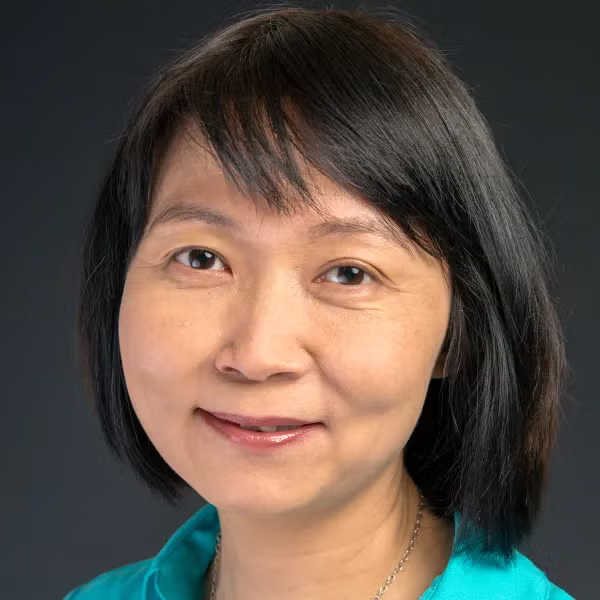
Xiaoqin Elaine Li, Ph.D., recipient of the 2018 Edith and Peter O’Donnell Award in Physical Sciences, is an experimental physicist at The University of Texas at Austin (UT Austin) whose research explores how light interacts with matter at ultrafast time scales and the smallest length scales.
As the Jack S. Josey – Welch Foundation Chair in Science at UT Austin, Dr. Li is a Professor of Physics and Founding Co-Director of the newly established Texas Quantum Institute (TQI). Her research is fundamental, but it points toward practical ends: quantum sensing, highly secure communication and energy-efficient computing devices that could help meet the mounting power demands of AI.
TAMEST recognized Dr. Li with the 2018 O’Donnell Award in Physical Sciences for her pioneering contributions to understanding and controlling the quantum behavior of electrons, spins and photons in novel materials. On September 10, she will join other past O’Donnell Awards recipients at the Edith and Peter O’Donnell Awards Summit in Austin to share updates on her work and discuss the O’Donnell Awards’ continuing impact on Texas research and innovation.
As TAMEST celebrates the 20th anniversary of the Edith and Peter O’Donnell Awards, TAMEST connected with Dr. Li to discuss how the award fueled her trajectory, how she is helping build a statewide quantum ecosystem across Texas and why giving early-career researchers space away from the academic “rat race” is essential for breakthrough science.
Tell us about yourself and your research.
I am a Professor of Physics at The University of Texas at Austin and Founding Co-Director of the Texas Quantum Institute. I am an experimental physicist, and my research focuses on how light interacts with matter at extremely small length scales and very fast time scales.
I started my graduate research on understanding the building blocks of quantum computers. Following that, my research has centered around understanding how electrons, spins, photons and collective excitations behave in materials, and how we might eventually control those behaviors for new technologies. With the recent progress in quantum computing and quantum sensing, I am steering part of my research program back to these rapidly evolving areas.
Your work has advanced understanding in condensed matter physics and materials science — how would you describe the real-world impact of your research?
Much of my research is fundamental, but it is motivated by questions that connect directly to future information technologies. If we can understand and control quantum behavior in materials, we may be able to build better platforms for quantum sensing and energy-efficient computing devices, problems that are becoming more urgent with the rise of AI and the high energy budget these technologies require.
For example, materials that emit one photon at a time could become building blocks for secure communication and quantum photonic devices. Similarly, understanding how energy and information move through quantum materials can guide the design of future electronic and optoelectronic systems.
What did receiving the 2018 O’Donnell Award in Physical Sciences mean to you at that point in your career?
Receiving the O’Donnell Award was a tremendous honor and encouragement. At that stage, my group had built a strong research program, but we were still pushing toward new directions. The award was not only a meaningful celebration of our past accomplishments but also reminded me of the importance of pursuing risky and new ideas.
Since then, the impact of my research program has grown continuously. I still remember the ceremony itself, which had a wonderful personal touch. I had a chance to reflect on how my parents and my past mentors have encouraged me along the way. A young researcher outside my field told me afterward that he was very touched by my personal story. It was a wonderful experience.
How did the recognition influence your professional trajectory, collaborations or visibility in your field?
The award increased the visibility of my research both within Texas and nationally. It helped introduce my work to a broader scientific community beyond my immediate field and created opportunities for conversations with researchers in engineering and materials science.
In the years since, my work has become increasingly connected to collaborative efforts in quantum science, including the most recent development of the Texas Quantum Institute at UT Austin.
As we celebrate the 20th anniversary of the O’Donnell Awards, what stands out to you about the award’s legacy in Texas?
What stands out to me is that the O’Donnell Awards have helped build a culture of recognizing ambitious, high-quality research within Texas. The awards identify researchers at an important stage in their careers and give them visibility, encouragement and a broader platform.
Over 20 years, that has created a remarkable network of scientists and engineers. Personally, I have worked with at least three O’Donnell Award recipients from both UT Austin and Texas A&M University.
Why do you live and work in Texas?
Texas is a place where big ideas can grow. UT Austin offers an exceptional combination of scientific excellence, strong students, collaborative colleagues and institutional ambition. The state also has a history of supporting medical research and, more relevant to my field, semiconductor research.
TQI, which I co-direct, has received state investment in establishing a quantum metrology lab. There is tremendous momentum to build a more advanced and collaborative quantum ecosystem across the state.
There are some wonderful private foundations such as the Welch Foundation that have supported my work from the beginning, and I now hold a Welch Science Chair position. Of course, organizations like TAMEST and the recent Hill Prize competitions facilitated by TAMEST also help support and grow science here.
What makes you most passionate about your work?
Most scientists, myself included, would agree that we are ultimately driven by curiosity. When we pursue the answer to one question, we often discover other open and even more compelling questions.
It is a process that can be very addictive. I also love working with students and postdocs at UT Austin. Experimental physics requires creativity, persistence, skills and teamwork. Their passion for research feeds into my energy.
What makes TAMEST unique among scientific organizations?
TAMEST is unique because it brings together leaders from medicine, engineering, science and technology across the entire state. That breadth creates opportunities for conversations that would not happen in a more specialized organization.
I have mentioned my collaborations with other O’Donnell Award recipients. All of them are actually engineers. I enjoy meeting people outside my immediate field of research. Such interactions often give me new and creative ideas.
TAMEST also plays an important role in highlighting the strength of research in Texas.
What advice would you give to early-career scientists in Texas who aspire to similar recognition?
My advice is to focus on asking important questions and doing rigorous, creative work. Recognition is meaningful, but it should not be the primary goal.
Social media skews everything. My observation is that it is causing more anxiety among young researchers. They are constantly measuring their accomplishments against those of the top three groups in the world in a given, somewhat narrow field. This type of attention-based mentality influences editors at some top journals and funding agencies.
This culture is not very healthy. It also creates this wrong impression that everything in science is a rat race. A scientist I admire greatly once told me, “I was interested in some topics that others were not paying attention to. I was later considered a pioneer in several fields.” Enduring some years of lonely work is often necessary for doing seminal work in science.
Is there anything else you’d like to add?
I am grateful to TAMEST and to the O’Donnell family for creating an award that recognizes and supports researchers in Texas. I am also grateful to my students, postdocs, collaborators, mentors and colleagues.
Accomplishment is often described through individual awards, but research is fundamentally a collective effort. Perhaps we can consider using this platform to celebrate some collaborative accomplishments in the future. I hope this award continues to inspire the next generation of scientists in Texas to pursue bold and meaningful questions.