
TAMEST Profile: TAMEST Member Rebecca Richards-Kortum, Ph.D. (NAM, NAE, NAS), Rice University
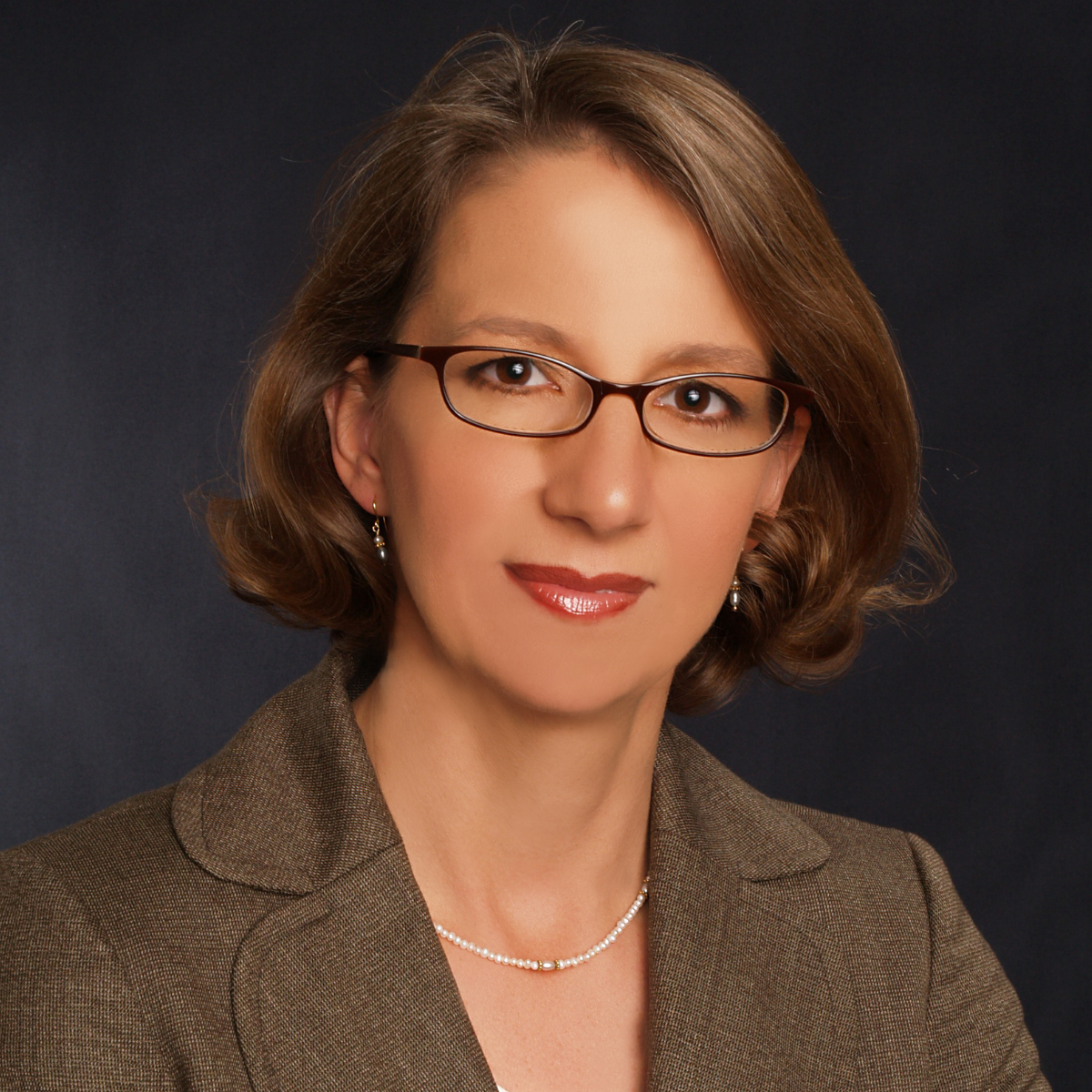
TAMEST Member Rebecca Richards-Kortum, Ph.D. (NAM, NAE, NAS) of Rice University has dedicated her career to the intersection of engineering, medicine and global health, driven by the conviction that everyone should have access to quality health care, regardless of where they live.
The Malcolm Gillis University Professor of Bioengineering and Co-Director of the Rice360 Institute for Global Health Technologies, Dr. Richards-Kortum is internationally recognized for developing low-cost, high-performance medical technologies that expand access to care in high‑need settings – from neonatal wards in sub-Saharan Africa to clinics across Texas.
Her pioneering work in point-of-care screening and neonatal care has helped close critical gaps in diagnosing and treating conditions such as cervical cancer, preterm birth and respiratory distress in premature infants. Last year, Dr. Richards-Kortum became one of the first TAMEST Members to be elected to all three National Academies (the National Academy of Medicine, the National Academy of Engineering and the National Academy of Sciences), a remarkable milestone achieved by only 28 individuals worldwide.
TAMEST connected with Dr. Richards-Kortum to learn more about her journey in global health engineering, her deep commitment to mentoring the next generation of innovators and her vision for advancing health equity in Texas and around the world.
Tell us a little about yourself and your work.
I am a mom from a small town in Nebraska who loves engineering. I believe that everyone deserves access to high-quality health care, no matter where they live.
I feel fortunate to have had the right mentors who encouraged me to study biomedical engineering and to fight for underserved populations using the tools that I know and have. For me, engineering is about using science to solve societal problems. I have seen how, when used effectively, it can help solve health care challenges.
I am the Malcolm Gillis University Professor of Bioengineering at Rice University and Co-Director of Rice360 Institute for Global Health Technologies. My research and teaching focus on developing inexpensive, effective medical technologies to address health care challenges.
These technologies are designed to work in settings where they are needed most. They address critical gaps in care, including cervical cancers and preterm birth. My collaborative work aims to develop and translate technologies to clinical settings, improving access to low-cost, efficient equipment and innovations that can save lives – spanning cancer diagnostics to neonatal care.
What first inspired you to focus your engineering career on improving health care access in resource-limited settings?
I first visited Malawi in 2005 and saw three important things. First, I saw neonatal wards where small and sick babies died every day due to the lack of equipment and infrastructure that was commonplace in high-income countries. In other parts of the very same hospitals, I saw broken and unused medical technologies taking up valuable space in an equipment graveyard due to a lack of spare parts and excessive repair costs. And finally, I saw incredible expertise in health care workers and engineering professionals who cared for these babies every day.
The first two observations broke my heart, as a mother and as a bioengineer. The third observation gave me hope and a desire to collaborate with country experts in health care and engineering to effectively design medical solutions that meet the constraints of all settings, especially the most underserved and under-resourced.
Many of your innovations bridge engineering, medicine and global health. How do you approach interdisciplinary collaboration, and what makes those partnerships successful?
The devices we develop are affordable, durable and sustainable solutions that are locally maintainable and function well in settings that need them most. As a bioengineer, I have seen that while technologies designed for under-resourced settings are important, the devices themselves do not save lives. They are useless without training for both health care professionals who use the devices and biomedical technicians who maintain them.
Further, data on the effectiveness and use of the equipment are critical to support system change in hospitals and with governments. Therefore, as an engineer, I have seen how critical it is to adopt an interdisciplinary, collaborative approach to save lives and create systemic change. I do not carry out any of my research or work without the support of my colleagues across all disciplines.
You were one of the first members of TAMEST to be elected to all three National Academies. What did that milestone mean to you personally and professionally?
I am deeply honored by this recognition from the National Academies of Medicine, Engineering and Sciences. Professionally, being elected to all three National Academies has felt like the highest form of endorsement that health equity is important and seen. My hope is that this sends a message to the next generation of researchers that doing important work for social impact is recognized at the highest levels of the scientific community.
Personally, these honors never felt like they belonged to me alone. When I think of these recognitions, I see a map of the people I have worked with, including my colleagues, my students and researchers, our clinical partners and my mentors along the way. Together, we are expanding the definition of excellence to include equity.
What does being a member of TAMEST and the National Academies mean to you?
Being a member of TAMEST is an incredible honor. Texas is my home, and while my work has traditionally benefited communities abroad, there is an incredible need here that will not be addressed without a concentration of talent in our own state.
I see TAMEST as a bridge that brings Texas institutions together to collaborate on the state’s biggest scientific issues. At Rice360, we are starting to map the needs in Texas to improve health outcomes for women and children. Lessons from working abroad have taught me that big movements towards change cannot happen in a silo. Being a member of TAMEST and the National Academies allows me to push for global health equity to be a core priority of American engineering and science.
You have served on the TAMEST Edith and Peter O’Donnell Awards committee. Why was it important to you to dedicate your time and expertise to this program?
I chose to serve on TAMEST’s Edith and Peter O’Donnell Awards committee because mentorship and the elevation of early-career research are the only ways our work will continue to advance. Awarding researchers at pivotal moments in their careers and recognizing them for important work are among the most important things I can do to support my community and field. It is also fun as I am always seeking to learn new things. I find the creativity of the applications inspiring.
Mentorship has been a defining theme in your career. What principles guide your approach to mentoring students and early-career researchers?
I would not be where I am today without the mentors in my life. Being a mentor to my students and researchers is one of the greatest and most fulfilling jobs I get to do. My hope is that my students and researchers will embrace the process and give in to the discomfort of engineering for real-world impact. In global health, things break, logistics collapse, and, while it might not seem like it in the moment, failure can be productive.
You have helped build programs that empower students to develop technologies for global impact. What advice do you give young scientists and engineers who want their work to make a meaningful difference?
At Rice University, I have had the opportunity to establish transformative educational programs in global health technologies. From our first program, the Beyond Traditional Borders (BTB), to Rice360, our students tackle global health challenges through interdisciplinary approaches.
Rice360 has emerged as a leading program for health technology education and research, with a distinctive focus on problem-based learning. Our mission is to innovate for global impact, develop highly effective, low-cost health care solutions for underserved communities and educate future leaders to innovate and implement solutions.
The advice I would give to young scientists and engineers who want their work to make a difference is not to give up – your passion and work are needed, especially now more than ever.
Looking back at your career, what accomplishment are you most proud of, and what impact do you hope it will have in the decades to come?
If you ask me what I am most proud of in my career, I will not show you a device or publication; I will show you a photo of me with my students.
I am most proud of my students and the impact they have made in the world and continue to make. They are seeds planted, now making global changes in health care. Some of my earlier students are trailblazers in their fields and have become world-class professors at Duke, Vanderbilt, Johns Hopkins and Stanford (to name a few), leading their own labs and training their own students to tackle global health challenges.
Why do you live and work in Texas?
I was born and raised in Nebraska and received my undergraduate degree in physics and mathematics from the University of Nebraska. After doing my Ph.D. at MIT, I moved to Texas to teach at The University of Texas at Austin, where I helped found the Biomedical Engineering department. In 2005, I moved to Rice University as Chair of the Bioengineering Department and have been in Houston with my husband and children ever since.
As a bioengineer, I have found Texas, and specifically Houston, to be an ideal location to do my work. Rice is across the street from the Texas Medical Center, the largest medical district in the world. This has provided critical access to important collaborations that help advance my work together with medical experts.
And you will not find better queso in the entire world. Trust me, I have looked.