
TAMEST Member Institution Spotlight: Driving Innovation at UT San Antonio
As one of Texas’ fastest-growing research universities, The University of Texas at San Antonio (UT San Antonio) is rapidly expanding its impact across fields ranging from artificial intelligence and cybersecurity to cancer research and brain health. Last year, the university executed a historic merger with The University of Texas Health Science Center at San Antonio to create a comprehensive research campus with an academic health center under a single mission.
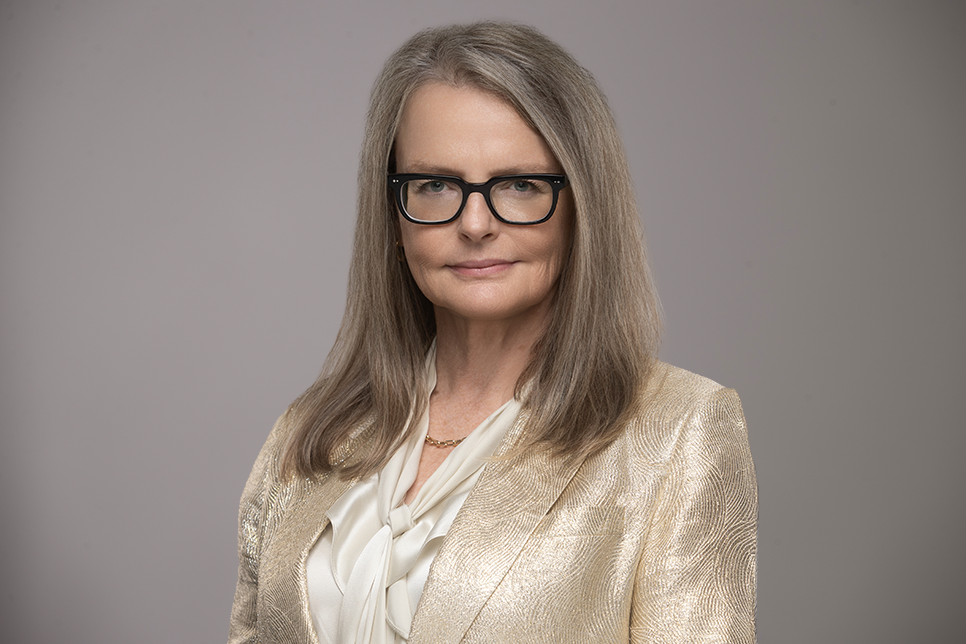
The merger immediately made the newly formed UT San Antonio the third-largest research university in Texas, with more than $520 million in annual research expenditures. It also brought two R1 institutions together to operate as one. Helping to lead this progress and growth at UT San Antonio is Jennifer Sharpe Potter, Ph.D., M.P.H., Senior Executive Vice President for Research and Innovation.
A clinical psychologist by training, Dr. Potter has spent more than 16 years building clinical and translational research at UT Health San Antonio — including founding the Be Well Institute on Substance Use and Related Disorders and leading its National Institutes of Health (NIH)-funded Clinical and Translational Science Award. Throughout her career, she has focused on turning rigorous science into care that reaches real communities.
TAMEST connected with Dr. Potter to learn more about how she is taking charge to ensure faculty at the newly merged UT San Antonio have the infrastructure, partnerships and support they need to do their most ambitious work.
The recent merger of UTSA and UT Health San Antonio marked a historic milestone. Talk about the groundbreaking union and what it means for the future of research at your institution.
On September 1, 2025, UTSA and The University of Texas Health Science Center San Antonio became one university — The University of Texas at San Antonio. It immediately made us the third-largest research university in Texas, with more than $520 million in annual research expenditures. For our faculty, the significance is the adjacency it creates: an engineer working in AI or cybersecurity now sits in the same institution as a neurologist, an oncologist or an aging-biology researcher.
That convergence of disciplines is where the most consequential discoveries of the next decade will happen, and we have built the structure to pursue them.
What two to three areas currently define UT San Antonio’s research enterprise?
Three areas define our research enterprise. The first is national security, cybersecurity and AI — anchored by our National Security Collaboration Center, the Department of Energy–funded Cybersecurity Manufacturing Innovation Institute, and the state’s first College of AI, Cyber and Computing, in a city widely regarded as the largest cybersecurity hub outside Washington, D.C.
The second is brain health and neuroscience, spanning the Glenn Biggs Institute for Alzheimer’s and Neurodegenerative Diseases, which is home to the first NIA-designated Alzheimer’s Disease Research Center in Texas, the Brain Health Consortium and the Barshop Institute for Longevity and Aging Studies — a national leader in research in aging and longevity.
The third is cancer, led by our Mays Cancer Center, the only NCI-designated cancer center in South Texas. Each is distinctive, and each is strengthened by the others now that they sit under one roof.
UT San Antonio has significantly increased its research funding over the past decade. What is its current research expenditure, and what factors have driven this growth?
We closed FY25 at roughly $520 million in research expenditures, which makes us the third-largest public research university in Texas. The most immediate driver is the merger, which brought two R1 institutions together, but the trajectory predates it: sustained investment in faculty, deliberate cluster hiring in our signature fields and a downtown research campus that gave those teams room to grow.
Federal confidence has followed — we now rank in the top two to three percent of U.S. institutions for NIH funding. Ultimately, the growth reflects our faculty’s competitiveness; our job is to keep removing the barriers between them and their best ideas.
How is UT San Antonio building partnerships with industry, government and other academic institutions to address real-world challenges (such as cybersecurity, health disparities, advanced manufacturing and more)?
Partnership is how we translate research into impact, and our model is built around convening. In national security, our National Security Collaboration Center brings federal and industry partners together with our faculty, while our Cybersecurity Manufacturing Innovation Institute (CyManII) leads a national consortium of federal labs, universities and companies and now trains critical-infrastructure operators.
In health, we work hand in hand with University Health, Southwest Research Institute, Texas Biomedical Research Institute and the military medical community to address the needs of a majority-Hispanic region that carries a heavy burden of cancer, diabetes and dementia. The throughline is that we organize these collaborations around real problems facing San Antonio, Texas and the nation.
What initiatives are helping early-career faculty and students build successful research careers?
Our faculty are the foundation of our research enterprise, so we invest early. For early-career investigators, that means competitive startup support, mentoring and recruitment vehicles like the Cancer Prevention and Research Institute of Texas’ (CPRIT) first-time tenure-track awards that let us bring rising scientists to San Antonio and set them up to win federal funding. The UT System’s Science and Technology Acquisition and Retention (STARs) program is another critical investment, helping recruit and retain outstanding faculty while providing the advanced research infrastructure they need to accelerate discovery.
For students, our clinical and translational science programs, NIH-funded training grants and undergraduate research opportunities create a genuine pipeline from the classroom to the lab. As one of the nation’s largest Hispanic-Serving Institutions, we take particular pride in developing research talent that reflects the communities we serve.
We are hopeful that the Dementia Prevention and Research Institute of Texas (DPRIT) will do the same for our efforts to support the public good and help to build the next generation of Alzheimer’s Disease and neurodegenerative disease scientists.
What might surprise people most about research happening at UT San Antonio?
A few things tend to surprise people. We operate one of the top-ranked liver transplant programs in the country, in partnership with University Health System. The foundational discovery that the drug rapamycin can extend lifespan came out of our Barshop Institute.
And our Institute for Drug Development runs one of the largest early-phase oncology trial programs in the world, with a long list of cancer therapies that moved through it toward FDA approval. The breadth of what happens here, from national defense to the biology of aging, is greater than most people realize.
As UT San Antonio continues to excel as a major research institution, what excites you most about the next decade?
What excites me most is that we have built something genuinely new: a major research university and an academic health center operating as one, in fast-growing San Antonio (now the 6th largest city in the United States), that has earned a seat at the table with premier universities throughout Texas and the United States.
Over the next decade that means a new multispecialty research hospital and new science buildings rising in the South Texas Medical Center, where discovery and care sit side by side. It means using our strengths in AI and data science to accelerate work in cancer, brain health and beyond. We have set a clear goal to become a top-25 public research university by 2036 and the convergence we have created is how we get there.
How have state initiatives such as the Cancer Prevention and Research Institute of Texas (CPRIT) shaped UT San Antonio’s research enterprise, and what impact do you think the newly passed Dementia Prevention and Research Institute of Texas (DPRIT) will have?
CPRIT has been transformative. As the nation’s second-largest funder of cancer research after the National Cancer Institute (NCI), it has invested nearly $190 million in our institution since 2010, recruiting outstanding scientists, building the Mays Cancer Center into the only NCI-designated center in Central and South Texas, and funding prevention programs that reach communities across the region. DPRIT, which Texas voters approved in November 2025, is modeled on that same proven framework, with $3 billion dedicated to dementia and neurodegenerative disease.
We are exceptionally well positioned for it: the first NIA-designated Alzheimer’s center in Texas, a top-tier aging-biology institute and a new $100 million Center for Brain Health that is already operational. DPRIT can do for brain health in Texas what CPRIT did for cancer, and we intend to help lead it.
As one of TAMEST’s 23 member institutions, how has the organization helped foster collaboration and scientific leadership across the state?
TAMEST does something no single institution can do alone: it convenes Texas’s members of the National Academies and our Nobel Laureates across 23 institutions and treats the state’s scientific talent as a shared asset.
That model has helped recruit world-class researchers to Texas and elevated the careers of rising investigators through programs like the O’Donnell Awards, now in their 20th year. For us, membership connects our faculty, several of whom are National Academy members, to peers and collaborators statewide. It reinforces a conviction we share: that Texas competes best in science when its institutions work as a network rather than in isolation.
Is there anything else you’d like to add?
Only that the story here is fundamentally about place. Our research agenda is deliberately matched to our research and South Texas. That means defending the nation’s networks, addressing diseases that disproportionately impact the region and the nation and building a highly skilled workforce of the future.
We measure our success not only in expenditures and rankings, but in whether our science improves lives in the communities around us. That is the university we are building, and our faculty are the reason it is working.